
Augustinian Monastery
A religious house for Canons Regular of St Augustine, known as the Monastery of St Mary de Porto Puro, was erected in Clonfert in the twelfth century. It is believed to have been founded in the 1140s, though no primary source has been found to support this. The canons along with a convent of Arroasian canonesses lived in a double house about three hundred meters to the southeast of the cathedral until the nuns departed to a separate site about five hundred meters south of the cathedral by the later thirteenth century.
Abbey Remains
Very little survives of either of these foundations today. The overgrown footings of the claustral buildings and the outline of the cloister-garth of the abbey are evident in the landscape to the south of the public road. A short section of wall in the boundary hedge at this point appears to represent the lower layers of the south wall of the abbey church. Whatever may have remained of the main body of the church was lost when the road was constructed here in the 1820s. Most of this building, especially the windows of the conventual buildings were robbed out in the seventeenth century and reused in the construction of an addition (c.1640) to the Bishop’s Palace.
Abbey valued at £8 early 14th Century
The Canons Regular were still at Clonfert at the time of the Dissolution of Monasteries. We are told that Henry O’Gormacain who was abbot at the time, refused to surrender the abbey. He continued seized of the temporalities of it till his death, notwithstanding the king had united it forever to the bishopric. Immediately on the death of Henry, a namesake of his William O’Gormacain supported by the local O’Madden sept procured the abbey from the pope and kept possession until about 1657. The abbey was valued at £8 0s 0d in the Taxation of 1302-7.
Mill Park, Clonfert
A stream immediately to the east of the abbey originally functioned as a medieval mill race; the field on the east side of that stream is referred to as Mill Park, while a field to the north of the road is referred to as Pigeon Park. A grass covered structure in this field appears to be the base of circular medieval dovecote.
Nuns Acre
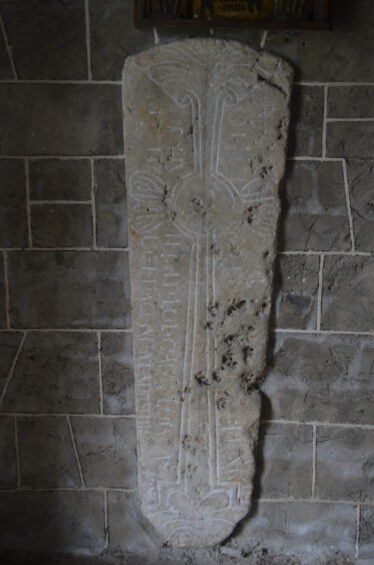
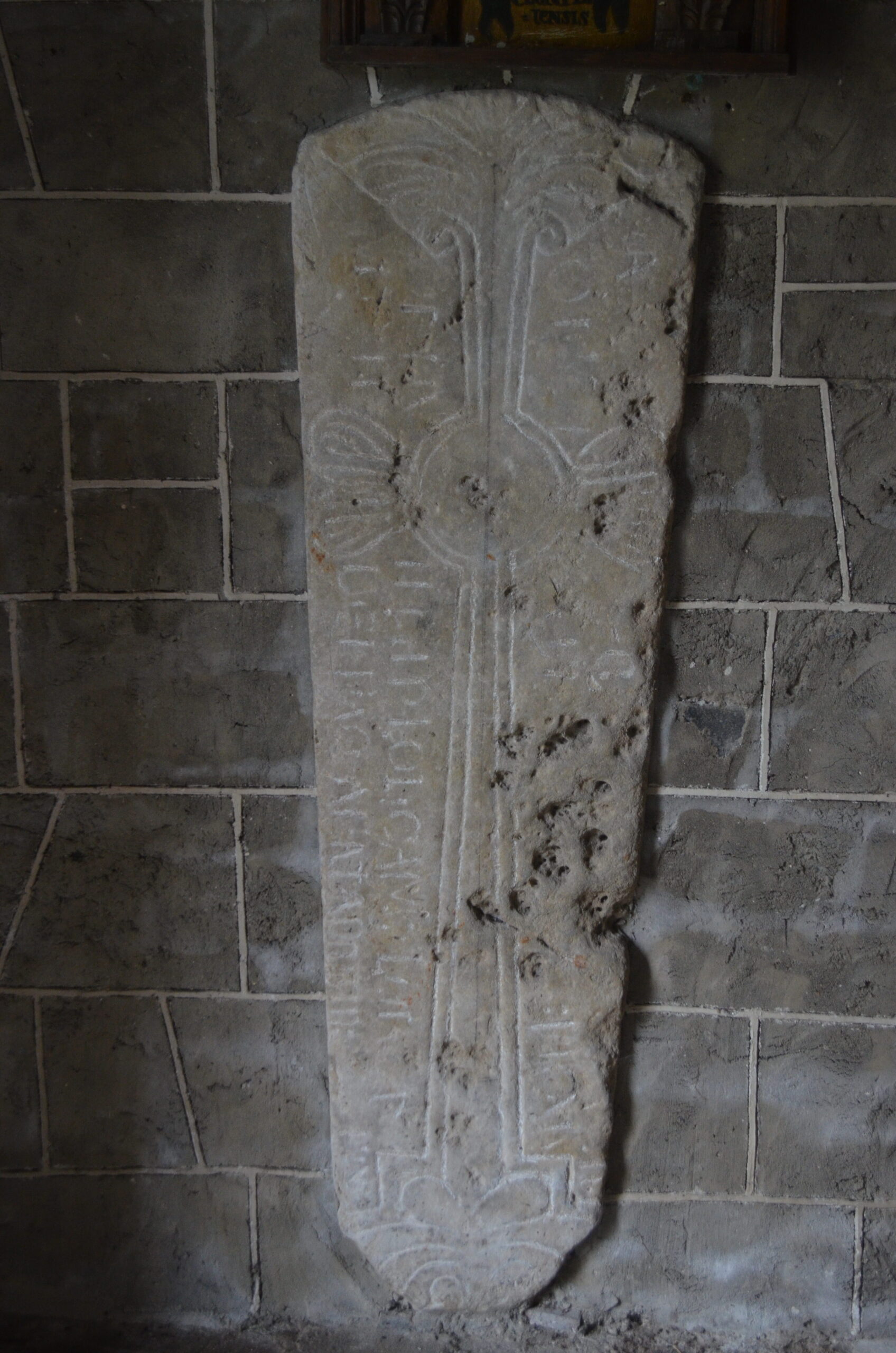
All that remains of the nunnery is the fieldname Nuns Acre. An elaborate thirteenth-century grave-slab removed from the site in the late nineteenth century was erected on the north wall beneath the bell tower in Clonfert Cathedral. The name of an abbess ‘Monygayun’ is given in the 1302-7 taxation list. The nunnery was then valued at 40s 0d.
No Comments
Add a comment about this page