
Medieval Pilgrimage at Clonfert


The first reference in the Irish chronicles to pilgrimage at Clonfert occurs in the context of a pilgrimage to Rome undertaken by Mael Runaid Ua Mael Doriad, the king of Cinéal Conaill in the early eleventh century. It shows that on the first stage of his pilgrimage circuit Ua Mael Doraid visited Clonfert and then went to Iona. The passage relates that in: 1026 – Mael Runaid Ua Mael Doraid, King of the North, [went] on his pilgrimage to Cluain Ferta Brénainn and proceeded from there to I Coluim Chille, and thence to Rome (AFM 1026).
Royal Pilgrimage
A rather poignant entry for the following year, 1027, relates that he died before reaching Rome. While this is the only account in an Irish chronicle that discusses pilgrimage at Clonfert it gives the impression that Clonfert functioned as a part of a broader pan-European pilgrimage circuit for Irish pilgrims, in this instance culminating in Rome. It is also obvious that what the chronicler referred to is an example of royal pilgrimage. Royal pilgrimage was commonly practiced in Ireland and was one of the means by which reform ideas and new architectural styles were translated from the continent.
Reference to a Shrine
The second reference in the Irish chronicles that also clearly associates Clonfert with pilgrimage refers to the erection of a shrine in 1162. It recounts that the ‘clergy of Brendan removed from the soil the bones of Moinnean and Cummian Fada and placed them in a shrine’ (AFM 1162). The fact that Cummian Fada and Moineann were enshrined at this time presupposes that they were already the foci of pilgrim devotion dating from a much earlier period. This highly significant event took place exactly five hundred years after the death of Cummian, who died in 662 (AFM). There was, it appears, a strong cult to Cummian in Ireland during the early medieval period − his name or the name of another Cummian is recorded on a cross-slab at Toureen Peakaun in Co. Tipperary (Waddell and Holland 1990, 179) and his cult was also promoted at Clonfert. The chroniclers are scant on details in relation to the event. However, it was seen as prestigious enough to be recorded. It is probable that some manner of formal ceremonial ‘translation of their relics’ took place, and that it is the formal translation that is referred to here.
Relics at Clonfert
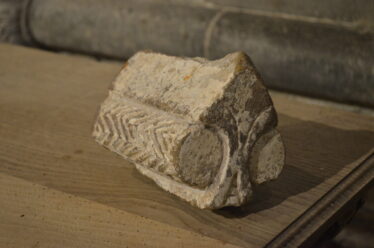
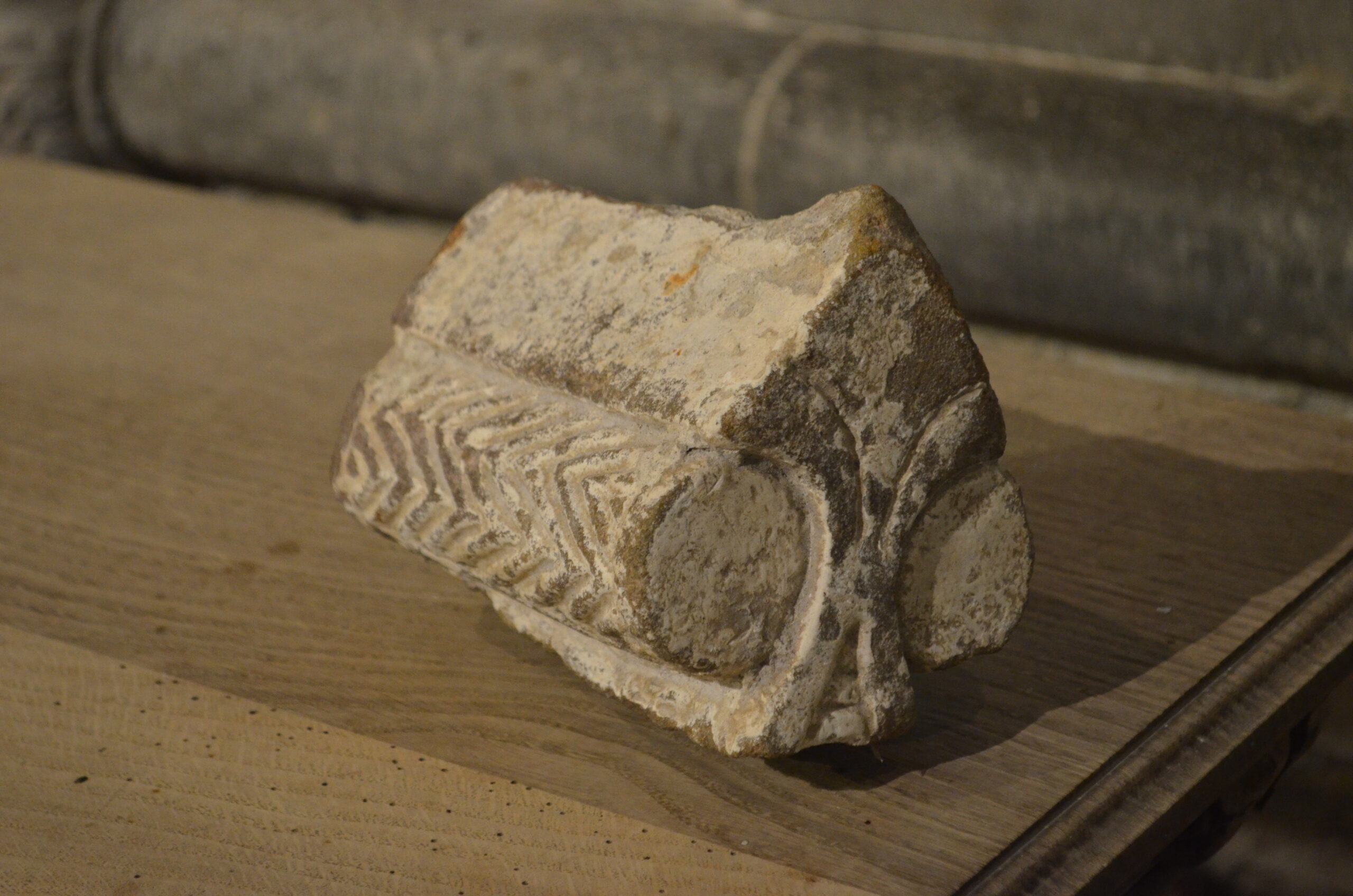
As Ó Floinn (1994, 14) explains ‘corporeal relics were obtained by exhuming or ‘translating’ the body of a saint from its original resting place’ The occurrence of such an event at Clonfert presupposes that the memory of those two holy men was alive in the minds of the religious community in Clonfert at that time. What is of special interest here is that one fragment of a gable finial / ridge stone of a twelfth-century Romanesque shrine survives in the cathedral. There was a second piece, but it was stolen in the 1980s. It is very likely that this stone shrine was the one associated with Moineann and Cummian Fada.
A Knight in Exile
A third reference to an act of pilgrimage at Clonfert is preserved in a twelfth century English work, written to promote the cult of William of Norwich, by Thomas of Monmouth (Jessopp and James 1896). It relates that a knight, ‘Philip de Bella Arbore, a native of Lorraine, who was a nobleman by birth; having committed fratricide, which included the burning of a church and its inmates, was instructed by the Pope to do a penance of ten years of wandering pilgrimage, clothed in mail on his bare flesh, girth with his sword and his arms ringed with iron bonds’ (Adair 1978, 108). Thomas of Monmouth explains that ‘after seven years of such exile Philip found his first mercy at Jerusalem where in the church of the Holy Sepulchre his mail shirt rent asunder’. But more significant to our understanding of pilgrim activity at Clonfert, he relates that ‘in like manner at St Brendan’s shrine, at Clonfert, (though no trace of it now remains) the sword broke in pieces’ (Adair 1978, 108).
Medieval Miracle
Finally, he recounts that at the shrine of St William of Norwich, in England, ‘the iron on his right arm suddenly snapped, startling the bystanders with its sound’ (Adair 1978, 108). This medieval account of a miracle is an important indicator of an act of royal pilgrimage, or at least of someone of noble birth, to three major centres of pilgrimage. Because it derives from a British rather than a native context, it is even more significant as it shows that Clonfert, in the mind of this twelfth-century chronicler, ranked among the pilgrimage destinations of Europe and the east. Thus, it adds further weight to the argument that during the medieval period Clonfert operated as a destination for pilgrims undertaking pan-European pilgrimage. The extent and volume of this pilgrimage is difficult to ascertain due to the complete lack of contemporary documents.
Great Shrine at Clonfert
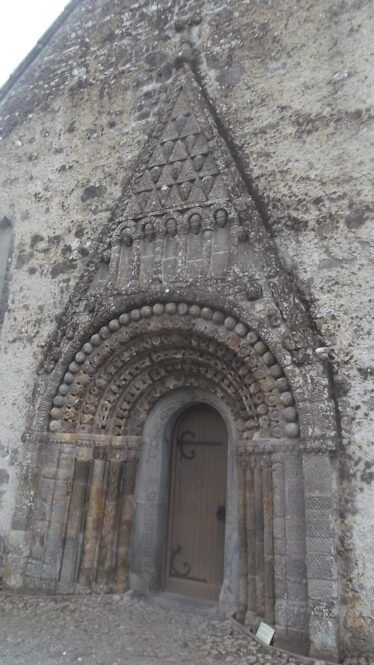
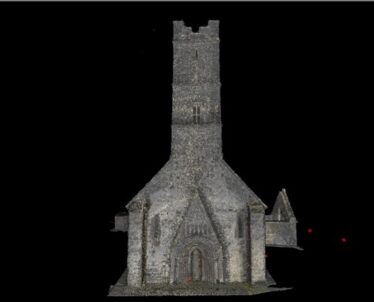
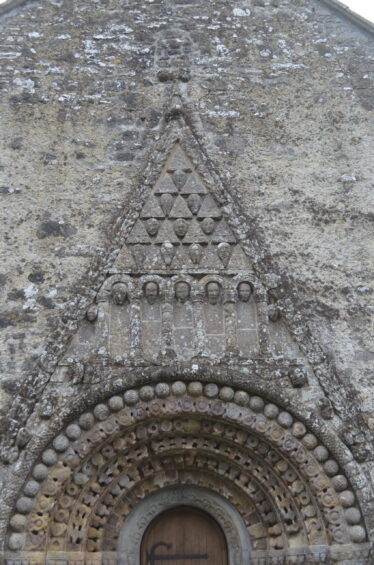
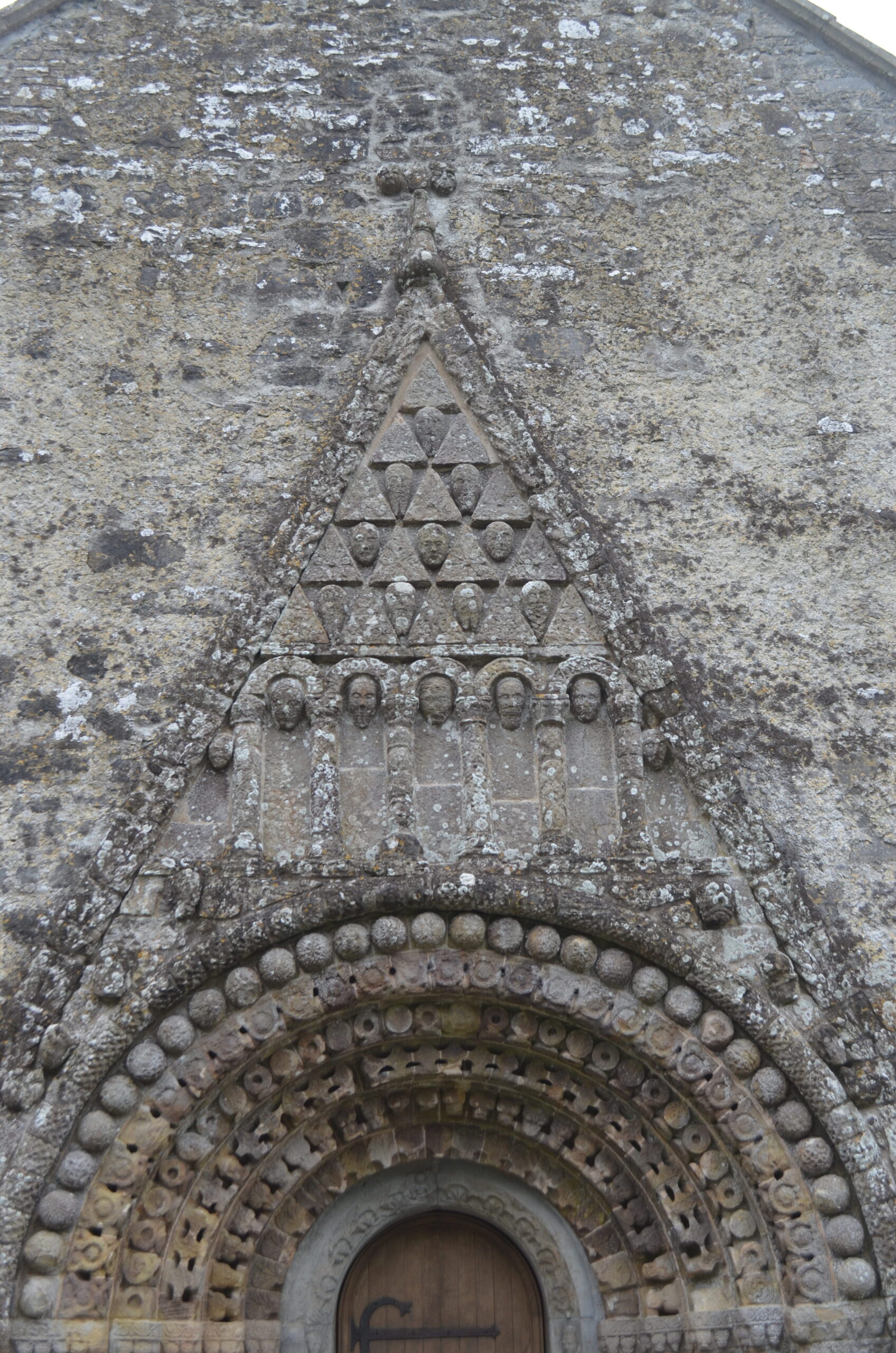
What of the relics of St Brendan? The Romanesque doorway, when examined closely, can be seen to imitate a great shrine. The upper pedimented gable lies inwards in the fashion of a gable as found on the diminutive metal shrines of the early Christian period. The double rope moulding that frames the pediment reflects the decorated metal strips used to bond the roof and gable of these shrines, while the series of round headed arcades have carved heads over blank spaces. The lack of ornament can only be explained if there were painted bodies beneath the heads. This in fact emulates the cast copper heads and painted enamel bodies that are found on contemporary Limoges shrines, thus suggesting that the Portal at Clonfert is in fact a great shrine. That St Brendan’s enshrinement is never mentioned in any of the chronicles should not be a surprise as it is highly probable that he is buried within the cathedral, the primary church on the site.
Heavanly Jerusalem
Therefore, it can be suggested that the Romanesque doorway at Clonfert represents a great shrine marking the pilgrim’s way to the founder’s burial place. Added to this a number of scholars have suggested that the ornamental arrangement on the doorway, especially the placement of human heads within the triangular niches represents the theme of the New or Heavenly Jerusalem reinforcing the links to pilgrimage.
No Comments
Add a comment about this page