
Connemara’s Landscape Heritage & Climate Change
Community Outreach Workshop
6 May 2026, Diamond Hill Community Centre, Letterfrack
“I realize what a difficult terrain is south Connemara: multidirectional from every point, so
complex in form it verges on the formless, disputing every step with stony irregularities, leach-like softness of bog or bootlace-catching twiggy heath. […] This is a land without shortcuts’. (Tim Robinson in Connemara: A Little Gaelic Kingdom)
Connemara has been a focal point of my research and has hosted me repeatedly in its occasionally sunny, often rainy, but always beautiful landscape. Over the past two years, my research has involved landscape observation and interviews with farmers, fishermen, archaeologists, biodiversity officers, and community members across the region.
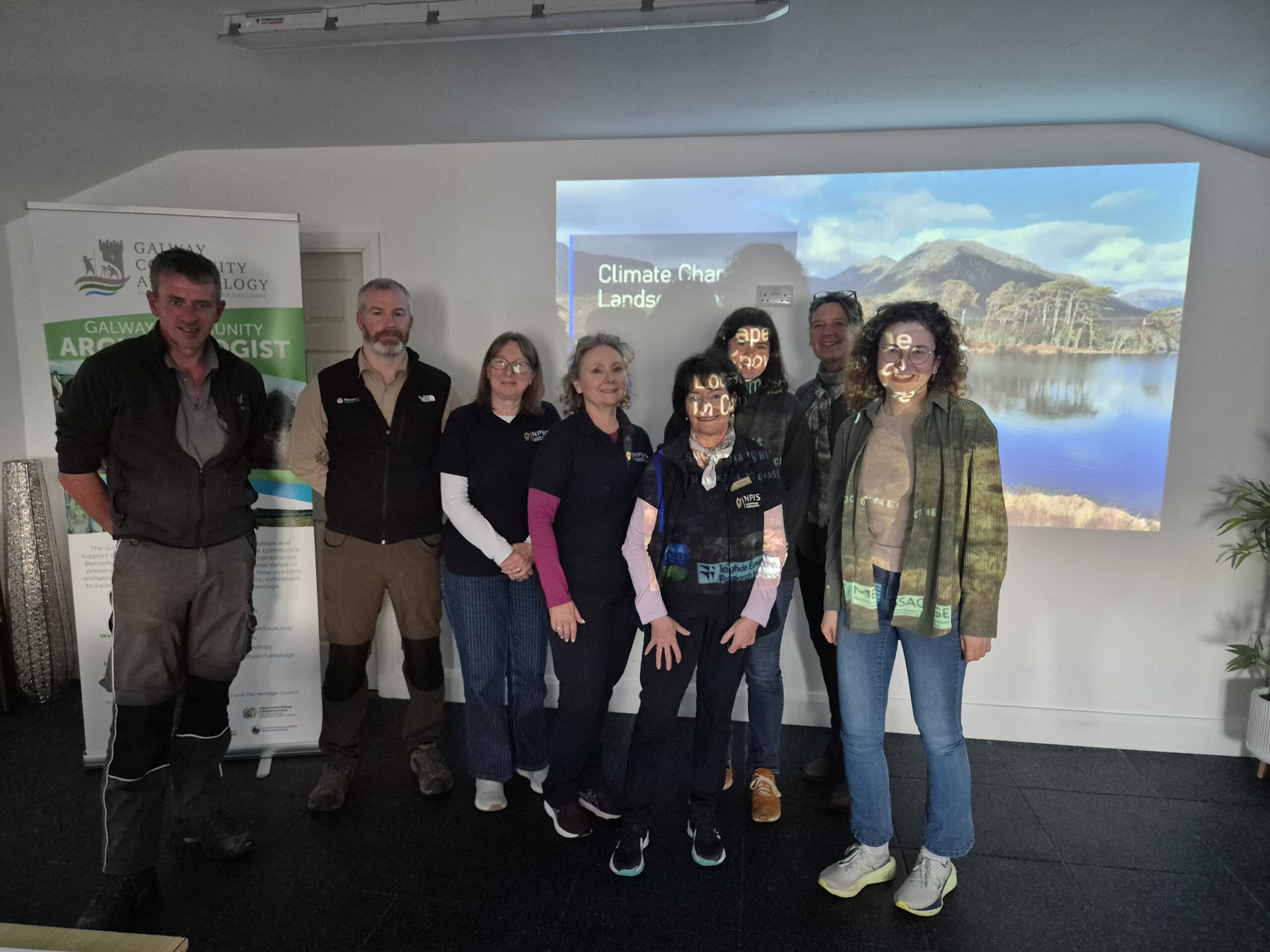
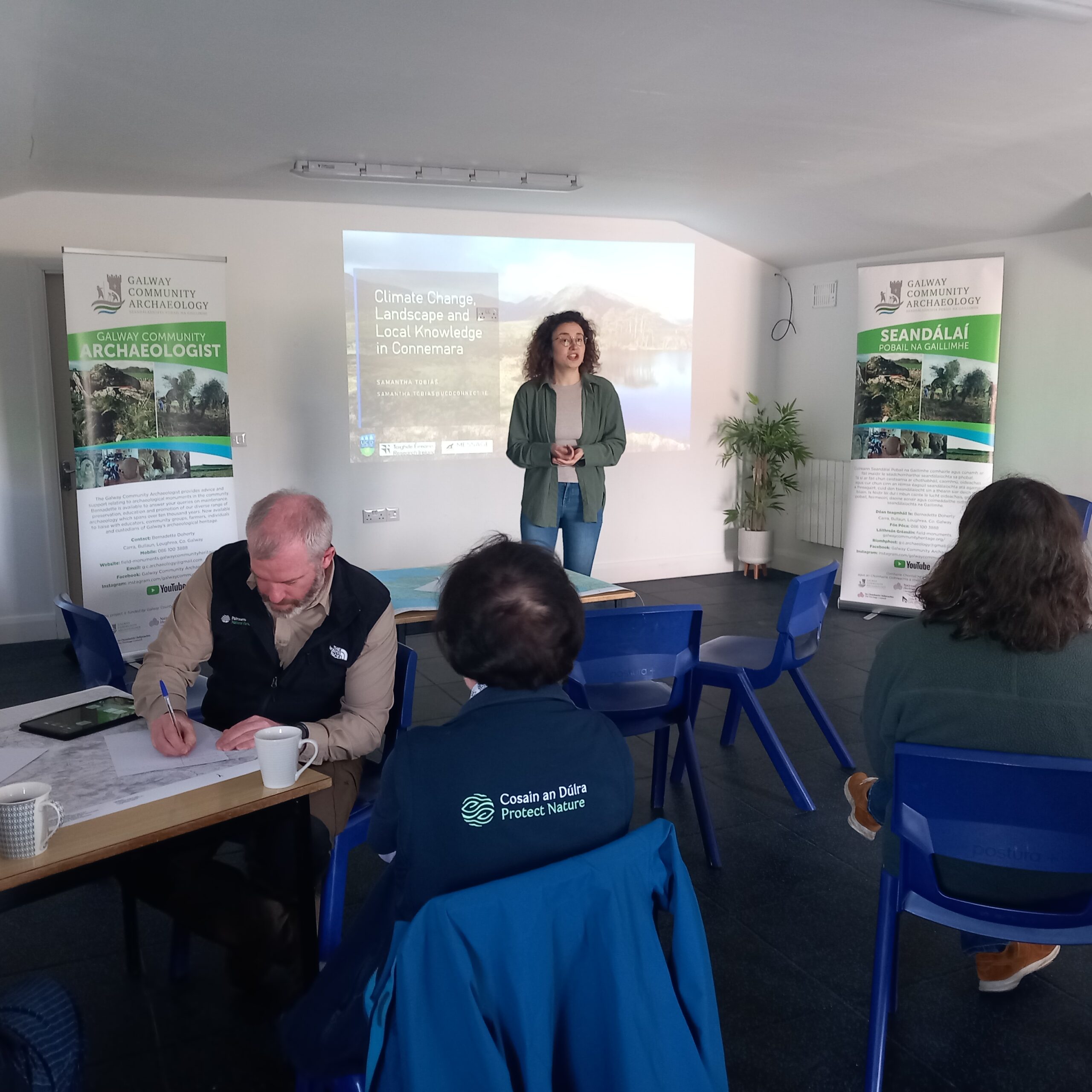
This time, I visited Connemara with a different goal: as part of my PhD on the climate vulnerability of cultural landscapes and biocultural heritage, I organised a community workshop to bring my research results back to the community itself. On 6 May 2026, in the Diamond Hill Community Centre in Letterfrack, Co. Galway and kindly funded by MESSAGE, I got together with community members, biscuits, and a cup of tea. The event was an opportunity to share my findings, invite discussion, and ask a simple but important question: does this research reflect local experiences of climate change and landscape?
Presentation of Research Outcomes
I opened the workshop with a presentation of my research outcomes on environmental and farming change, biodiversity, cultural continuity, and the significant vulnerability of coastal heritage. But the evening quickly became much more than a presentation of results becausea long and thoughtful discussion about the lived reality of change in Connemara unfolded. This conversation amongst participants built on the themes identified through my research, expanding on conservation and environmental governance in Connemara. Particularly the relationship between the National Park and the realities of living and working within Connemara’s wider cultural landscape were a point of discussion. Several participants reflected on the frustration of local knowledge not being part of broader environmental decision-making processes and policy discussions. What struck me most throughout the workshop was how often participants returned to the importance of documenting local knowledge itself. Much of this knowledge is highly detailed, place-specific, and grounded in lived experience, yet rarely finds its way into formal research or policy frameworks. The workshop reinforced something central to my research: climate vulnerability in cultural landscapes cannot be understood through environmental data alone. It also exists in memories, practices, livelihoods, stories, and relationships with place.
Rapid Check
As part of the evening, participants completed a short “Rapid Check” exercise developed through the research project. The exercise encouraged reflection on local traditions, climate change, and landscape vulnerability, while also opening discussions about how communities might document and assess change on their own terms.
Community Centred Research
By the end of the evening, what stayed with me most was the continued concern and care people expressed for the landscape around them, which I had already encountered during previous fieldwork. In many ways, the workshop reaffirmed why community-centred research matters: Not because local knowledge offers easy answers to climate change, but because it
is key to sustaining relationships between people, livelihoods, and landscape into the future.
Samantha Tobiáš
PhD Candidate, University College Dublin
No Comments
Add a comment about this page